80º ANIVERSARIO
ECHINACEA ANGUSTIFOLIA
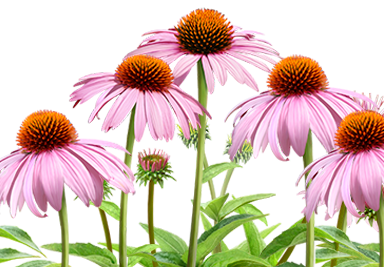
DESCRIPCIÓN:
La Echinácea es muy popular en el mundo de la fitoterapia por sus propiedades antinflamatorias y antisépticas y por aumentar las defensas de nuestro organismo. Pero sus beneficios no son nuevos, las diferentes tribus de indios de América del Norte ya utilizaban la planta por su acción medicinal.
Uso Medicinal:
Es un potente antiséptico y antinflamatorio. Refuerza la piel contra las agresiones externas, y resulta un tratamiento eficaz contra la artritis y demás inflamaciones de las articulaciones. También tiene una acción cicatrizante, reparando rápidamente el tejido dañado y actúa como antioxidante protegiendo la producción del colágeno en la piel.
Pero la propiedad más importante de esta planta medicinal es la que actúa directamente sobre el sistema inmunitario, reforzando las defensas y previniendo así la aparición de ciertas enfermedades.
HISTORIA:
Circa 1900, the reputation of echinacea among Eclectic physicians* was built on the common use of high-alcohol extracts of Echinacea angustifolia (Asteraceae) roots applied topically for wounds, infections, and poisonous bites and stings, and administered internally for acute infections now known to be bacterial. Beginning in the mid-20th century, European clinical research on plant preparations of fresh aerial E. purpurea plant juice, preserved with 22% ethanol or the whole plant extracted with 65% ethanol, established its usefulness in treating the common cold. Thus, the perception of Echinacea spp. root extracts was transformed based on their generic relationship. The proclivity of modern botanical use for evidence-associated applications has led to widespread confusion regarding the differences between these distinct botanical species and their preparations.
Echinacea angustifolia had been introduced into homeopathic practice in Europe in the late 19th century. Because of a severe shortage of this drug in Europe in the 1930s, the German phytopharmaceutical manufacturer Gerhard Madaus went to the United States to obtain seeds of E. angustifolia; however, he mistakenly bought E. purpurea seeds.34,35 Consequently, Madaus decided to extract the juice from the aboveground (aerial) part of the blooming E. purpurea plant.35 Preserved with 22% alcohol, E. purpurea plant juice with cichoric acid and water-soluble arabinoxylan and arabinogalactan polysaccharides is distinct from E. angustifolia root extracts in greater than 50% ethanol with echinacoside and is distinguishable from lipophilic alkamides.36 Because E. purpurea juice previously had not been used clinically, Madaus experimented with its use. Since then, much European research on Echinacea has used this preparation (Echinacin®, Madaus AG; Koln, Germany ) or similar preparations internally and externally.34-36
MEDICAMENTO HOMEOPATICO
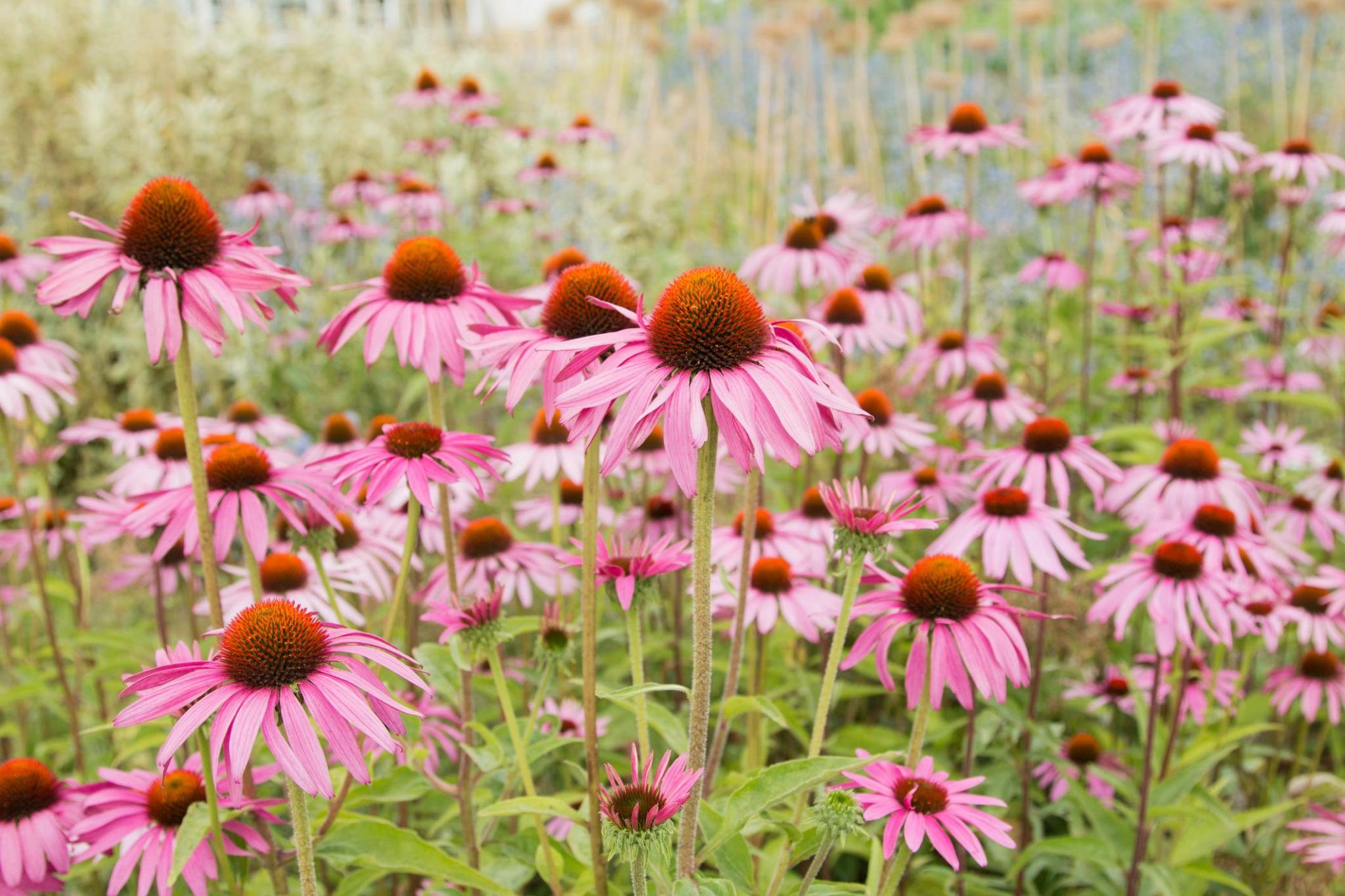
(Echinacea angustifolia is the Western species of E., not to be confounded with E. purpurea, or Black Sampson, the Eastern species.) N. O. Composite, allied to Rudbeckia. Tincture of whole fresh plant.
HISTORIA
MATERIA MEDICA
GENERALIDADES
We are indebted to the Eclectic school for this remarkable medicine as a "corrector of blood dyscrasia". Acute auto-infection. Symptoms of blood poisoning, septic conditions generally. Diarrhœa in typhoid. Gonorrhœa. Boils. Erysipelas and foul ulcers. Gangrene. Goitre with exophthalmic symptoms; full doses, also injecting 5-10 drops into thyroid gland. Tendency to malignancy in acute and subacute disorders. Last stages of cancer to ease pain. Venom infection. Cerebro-spinal meningitis. Puerperal infections. Tired feeling. Piles. Pustules. Acts on vermiform appendix thus has been used for appendicitis, but remember it promotes suppuration and a neglected appendicitis with pus formation would probably rupture sooner under its use. Lymphatic inflammation; crushing injuries. Snake bites and bites and stings generally. Foul discharges with emaciation and great debility.
Head.--Confused, depressed. Aches with a peculiar periodical flushing of the face, even to the neck; dizziness and profound prostration.
Nose.--Foul-smelling discharge, membranous formations protruding. Post-nasal catarrh with ulceration and fetor. Nose feels stuffed up. Right nostril raw, bleeding.
Mouth.--Canker; gums recede and bleed easily; corners of mouth and lips crack; tongue dry and swollen; sores; dirty brownish. Tongue, lips, and fauces tingle, with sense of fear about heart (Acon). White coating of tongue, with red edges. Promotes the flow of saliva.
Throat.--Tonsils purple or black, gray exudation extending to posterior nares and air-passages. Ulcerated sore throat.
Stomach.--Sour belching and heartburn. Nausea; better lying down.
Chest.--Pain as of a lump in chest and under sternum. Pain in pectoral muscles (Aristolochia).
Urine.--Albuminous, scanty, frequent, and involuntary.
Female.--Puerperal septicæmia; discharges suppressed; abdomen sensitive and tympanitic; offensive, excoriating leucorrhœa.
Extremities.--Aching in limbs and general lassitude.
Skin.--Recurring boils. Carbuncles. Irritations from insect bites and poisonous plants. Lymphatics enlarged. Old tibial ulcers. Gangrene.
Fever.--Chilliness, with nausea. Cold flashes all over back. Malarial fever.
Relationship.--Compare: Cenchris contortrix; Bothrops; Ars; Laches; Baptis; Rhus; Cistus; Hepar; Calendula.
Dose.--Tincture, one to ten drops, every two hours, and larger doses.
Locally, as a cleansing and antiseptic wash.
FUENTE: http://homeoint.org/books/boericmm/e/echi.htm
Materia Medica by John Henry Clarke The Materia Medica by John Henry Clarke was written in 1902.
Echinacea Angustifolia. (Echinacea angustifolia is the Western species of E.; not to be confounded with E. purpurea, or Black Sampson, the Eastern species.) N. O. Compositae, allied to Rudbeckia. Tincture of whole fresh plant. Clinical.-Appendicitis. Bites of rabid animals. Blood-poisoning. Carbuncles. Diphtheria. Enteric Fever. Gangrene. Poisoned wounds. Pyaemia. Rhus-poisoning. Scarlatina. Septicaemia. Snake-bites. Struma. Syphilis. Typhoid. Ulcers. Vaccination, effects of.
FUENTE: https://www.materiamedica.info/en/materia-medica/john-henry-clarke/echinacea-angustifolia
Materia Medica by James Tyler Kent
ESTUDIOS Y ENSAYOS CLINICOS
AUTORES: Jose Carlos Tavares Carvalho, C. M. V. Pedalino, Fabio Ferreira Perazzo, Martinho K.S, Leoni Bonamin, Cristina O Massoco.
Resumen
Atropa belladonna and Echinacea angustifolia have been used in homeopathy as modulators of inflammatory processes, in simple potency or 'accord of potencies', as recommended by homotoxicology. We evaluated their effects on leukocyte migration and macrophage activity induced by experimental peritonitis in vivo. Mice were injected (i.p.) with LPS (1.0 mg/kg) and treated (0.3 ml/10 g/day, s.c.) with different commercial forms of these medicines. Echinacea angustifolia D4—a simple potency preparation—and Belladonna Homaccord s , Belladonna Injeel s , Belladonna Injeel Forte s , Echinacea Injeel s and Echinacea Injeel Forte s —all in 'accord of potencies'— were tested. The association of A. belladonna and E. angustifolia in 'accord of potencies' produced an increase of polymorphonuclear cell migration (Kruskal-Wallis, P=0.03) and a decrease of mononuclear cell percentages (Kruskal-Wallis, Pp0.04), when compared with control, mainly in preparations containing low potencies. The proportion of degenerate leukocytes was lower in the treated groups, compared to a control group (Pp0.05). The treated groups showed increased phagocytosis (Pp0.05), mainly in preparations containing high potencies. Our results suggest that A. belladonna and E. angustifolia, when prepared in 'accord of potencies', modulate peritoneal inflammatory reaction and have a cytoprotective action on leukocytes. Homeopathy (2004) 93, 193–198.
Immunology and Homeopathy. 2. Cells of the Immune System and Inflammation
AUTORES: Paolo Bellavite,1 Anita Conforti,2 Francesco Pontarollo,1 and Riccardo Ortolani3
Resumen
-----
FUENTE: US National Library of Medicine
National Institutes of Health

Suscríbase a nuestras listas de contactos
Síganos